MANERA Spain
"Even the smallest details carry intention."
Cuando Annika Bruysten y su marido, François, cruzaron por primera vez el umbral de su casa en el canal de Ámsterdam, no encontraron grandeza, sino decadencia. “Lo único bonito era el pasillo”, recuerda ella. La vivienda había funcionado durante años como oficinas; el techo se caía y el sótano se usaba como aparcamiento. Tras siete años en el mercado, la mayoría habría desistido. Pero François quedó prendado de los detalles del siglo XVII que aún resistían en el vestíbulo. Y Annika vio un potencial infinito.
Habían vivido muchos años en Londres, siempre con la intención de comprar, pero sin decidirse. “Durante la pandemia comprendimos que era el momento”, explica. François, que es neerlandés, quería que sus tres hijos crecieran en Ámsterdam. “Queríamos que tuvieran otro tipo de infancia: jugar al aire libre, libertad, bicicletas en lugar de coches”. Para Annika, alemana de origen, la ciudad ofrecía también la cercanía de su familia.
Lo que siguió fue una restauración que equilibró el rigor con la imaginación. Un arquitecto se encargó de los planos de obra, pero el interior fue territorio de Annika, ideando también muchas de las soluciones ingeniosas que recorren la casa. “Pasaba las noches repasando cada detalle mentalmente, me relajaba, así podía dormir”, confiesa. El proceso se convirtió en una forma de meditación, visible en los gestos más pequeños. Buscar y encontrar se volvió su pasión: las estanterías combinan hallazgos de subastas con objetos que narran décadas de curiosidad y cuidado.
Annika se esforzó por devolver la vida a cada elemento original. Los espejos dañados por el mercurio fueron sustituidos por piezas de época; los dorados de las molduras revivieron su esplendor. El parquet, que parece antiguo, se instaló con un sistema de calefacción radiante. El color también desempeña un papel esencial. El mármol elegido para el baño y la chimenea del dormitorio marcó el tono de ambos espacios. El despacho cuenta otra historia de transformación. “Era espantoso”, recuerda. “Pero reabrimos una ventana cegada, añadí un banco en el alféizar y lo pinté de un amarillo profundo, conectado con el salón de época contiguo. Es ahora uno de mis rincones favoritos”.
Incluso los detalles más pequeños tienen intención. “Como hay tantas lámparas en la cocina, mandé grabar en los interruptores de latón el nombre de cada una. Me alegro de haberlo hecho, porque todavía tengo que mirar cuál es cuál”, cuenta Annika entre risas. En otra estancia, el antiguo botón de llamada al servicio ahora activa la música de toda la casa. Y el sótano, antaño un vacío de hormigón, alberga hoy una sala de juegos, un pequeño cine y una bodega: una capa de confort contemporáneo bajo siglos de historia.
Con una planificación meticulosa, creatividad y un profundo respeto por la historia del edificio, Annika ha logrado que una casa que parecía irrecuperable vuelva a latir. De hecho, la experiencia fue tan gratificante que la ha inspirado a dar el salto al interiorismo y ayudar a otros a crear su hogar definitivo.
AUTORA: Evelien Reich
When Annika Bruysten and her husband, François, first stepped inside their Amsterdam canal house, they weren’t met with grandeur but with decay. “The only thing that was beautiful was the hallway,” she recalls. The canal house had long been used as offices; the roof was unsound, and the basement was nothing more than a parking garage. After seven years on the market, most people would have turned away. Yet François was captivated instantly by the 17th-century details that still stood proud in the hallway. And Annika? She just saw the potential.
The couple had lived in London for many years, always intending to buy but never committing. “During Covid, we realised it was time,” she explains. François, being Dutch, wanted their three children to grow up in Amsterdam. “We wanted them to have a different kind of childhood – lots of playing outside, freedom, bikes instead of cars.” For Annika, originally from Germany, the city also promised proximity to family.
What followed was a restoration that balanced rigour with imagination. An architect guided the construction drawings, but the interiors were Annika’s domain. She dove head first into the seemingly unending amount of design choices and also came up with many of the inventive solutions throughout the house. “I would lie in bed going through every detail,” she recalls. “It calmed me down so I could sleep.”
The process became a form of meditation, and it shows in the smallest gestures: a boot room where each child has their own drawer for mittens and scarves; a bespoke brass planter with arched cut-outs that echo the fluted sides of the kitchen island while letting sunlight stream through from the adjoining dining room. Sourcing became her passion; their shelves hold auction finds – among them pieces by Björn Wiinblad, a favourite of hers – sitting alongside objects that speak of decades of curiosity and care.
Because the house dates back to the 17th century, the local Welstand – a municipal committee that monitors the preservation of historic facades and
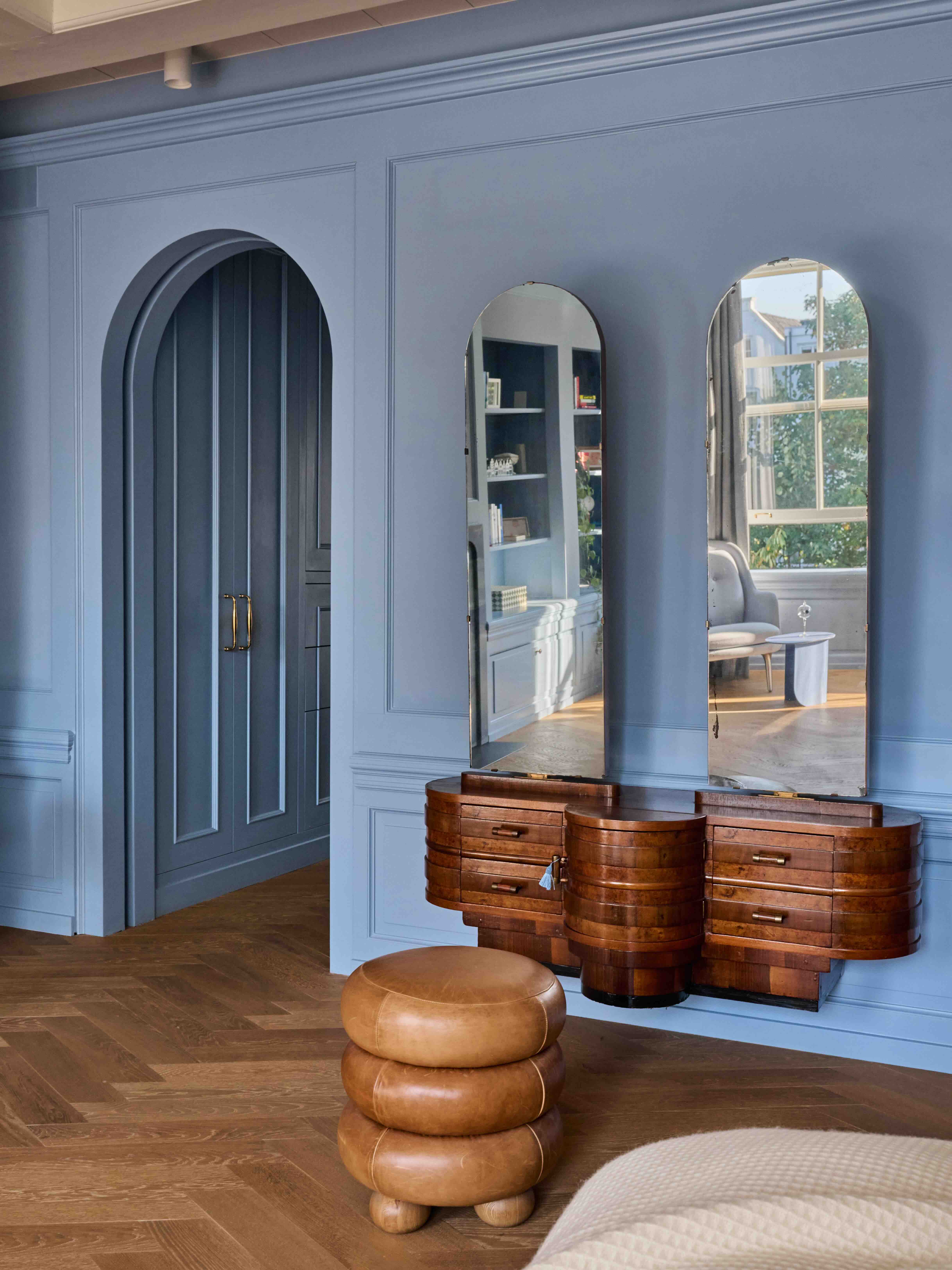
architecture – kept a close watch on the work. They needn’t have worried, because Annika went above and beyond to restore the original features wherever possible. Mirrors leaking mercury were replaced with period pieces; the gilding in the stijkamer was brought back to life. The parquet floors, which look original, are in fact new – carefully laid with underfloor heating concealed beneath them.
Colour also plays a starring role. The blue marble Annika chose for the bathroom and fireplace in her bedroom became the starting point of the design of both spaces. Her own office tells another story of transformation. “It was a horrible little alcove. My sister said, ‘You’ll never spend any time in there.’ But by reopening a blocked-up window, adding a seat in the sill, and painting it a deep yellow to connect with the adjoining stijkamer, it’s become one of my favourite spaces.”
Even the smallest details carry intention. “Because there are so many different lights in the kitchen, I had the brass switch boards of the light switches engraved with the names of the lamps. I’m so glad I did, since I still have to check which one is which,” Annika says. Elsewhere, a button that once summoned staff now fills the house with music, and the basement, once a concrete void, houses a lively playroom, cinema, and wine room – a layer of modern comfort beneath centuries of character, together creating an atmosphere that exudes calm.
“It’s so peaceful here, even though we’re in the middle of the city. When my parents come to stay, my father loves sitting in the window seat, just watching the boats on the canal.” Through meticulous planning, creativity, and a deep respect for the building’s history, Annika has made a home that once seemed beyond saving feel utterly alive again. Indeed, so enjoyable was the whole experience, she’s been inspired to take the leap into interior design, and to start helping others create their forever home.
AUTHOR: Evelien Reich
MANERA Spain
"Even the smallest details carry intention."
When Annika Bruysten and her husband, François, first stepped inside their Amsterdam canal house, they weren’t met with grandeur but with decay. “The only thing that was beautiful was the hallway,” she recalls. The canal house had long been used as offices; the roof was unsound, and the basement was nothing more than a parking garage. After seven years on the market, most people would have turned away. Yet François was captivated instantly by the 17th-century details that still stood proud in the hallway. And Annika? She just saw the potential.
The couple had lived in London for many years, always intending to buy but never committing. “During Covid, we realised it was time,” she explains. François, being Dutch, wanted their three children to grow up in Amsterdam. “We wanted them to have a different kind of childhood – lots of playing outside, freedom, bikes instead of cars.” For Annika, originally from Germany, the city also promised proximity to family.
What followed was a restoration that balanced rigour with imagination. An architect guided the construction drawings, but the interiors were Annika’s domain. She dove head first into the seemingly unending amount of design choices and also came up with many of the inventive solutions throughout the house. “I would lie in bed going through every detail,” she recalls. “It calmed me down so I could sleep.”
The process became a form of meditation, and it shows in the smallest gestures: a boot room where each child has their own drawer for mittens and scarves; a bespoke brass planter with arched cut-outs that echo the fluted sides of the kitchen island while letting sunlight stream through from the adjoining dining room. Sourcing became her passion; their shelves hold auction finds – among them pieces by Björn Wiinblad, a favourite of hers – sitting alongside objects that speak of decades of curiosity and care.
Because the house dates back to the 17th century, the local Welstand – a municipal committee that monitors the preservation of historic facades and
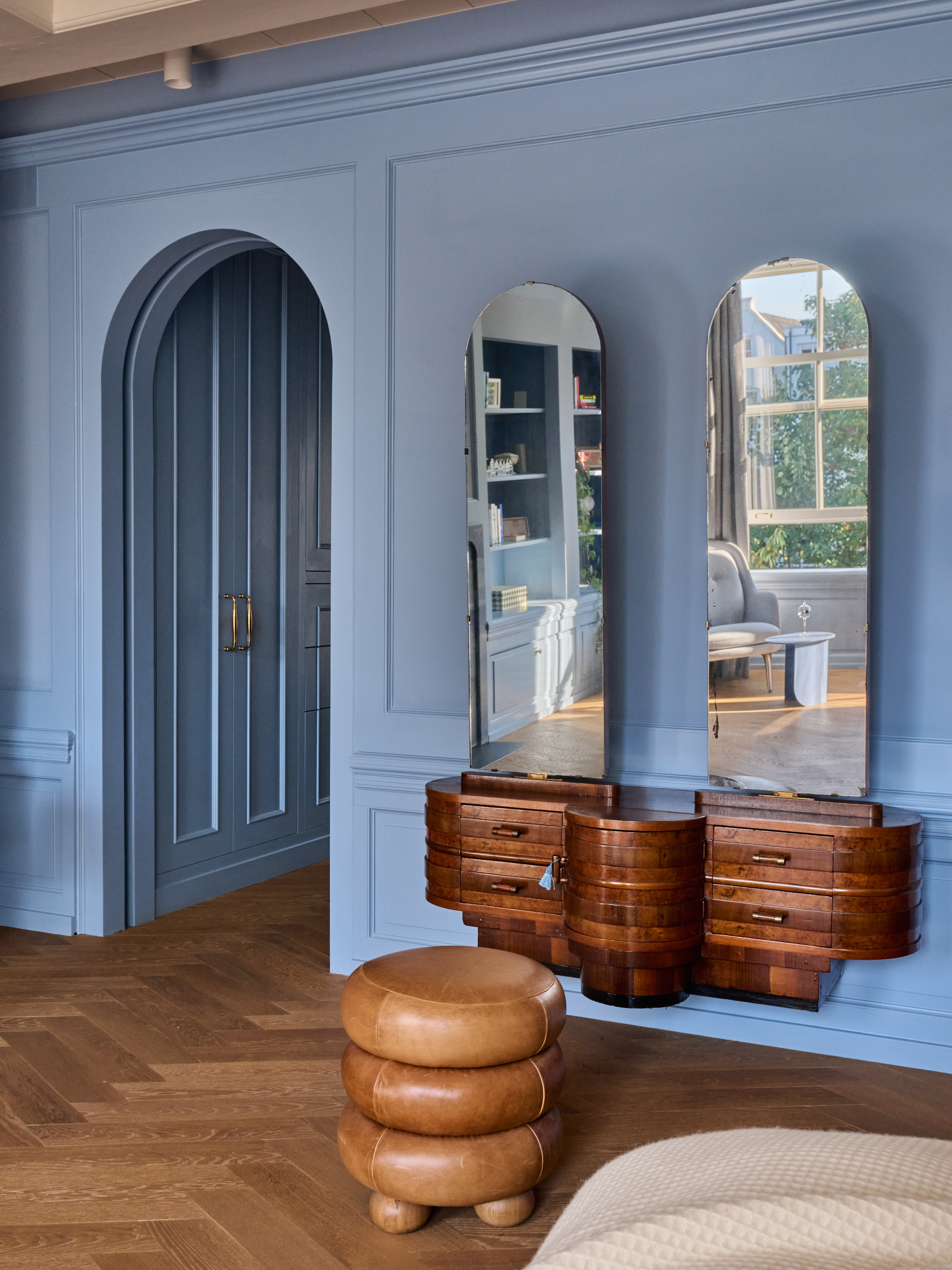
architecture – kept a close watch on the work. They needn’t have worried, because Annika went above and beyond to restore the original features wherever possible. Mirrors leaking mercury were replaced with period pieces; the gilding in the stijkamer was brought back to life. The parquet floors, which look original, are in fact new – carefully laid with underfloor heating concealed beneath them.
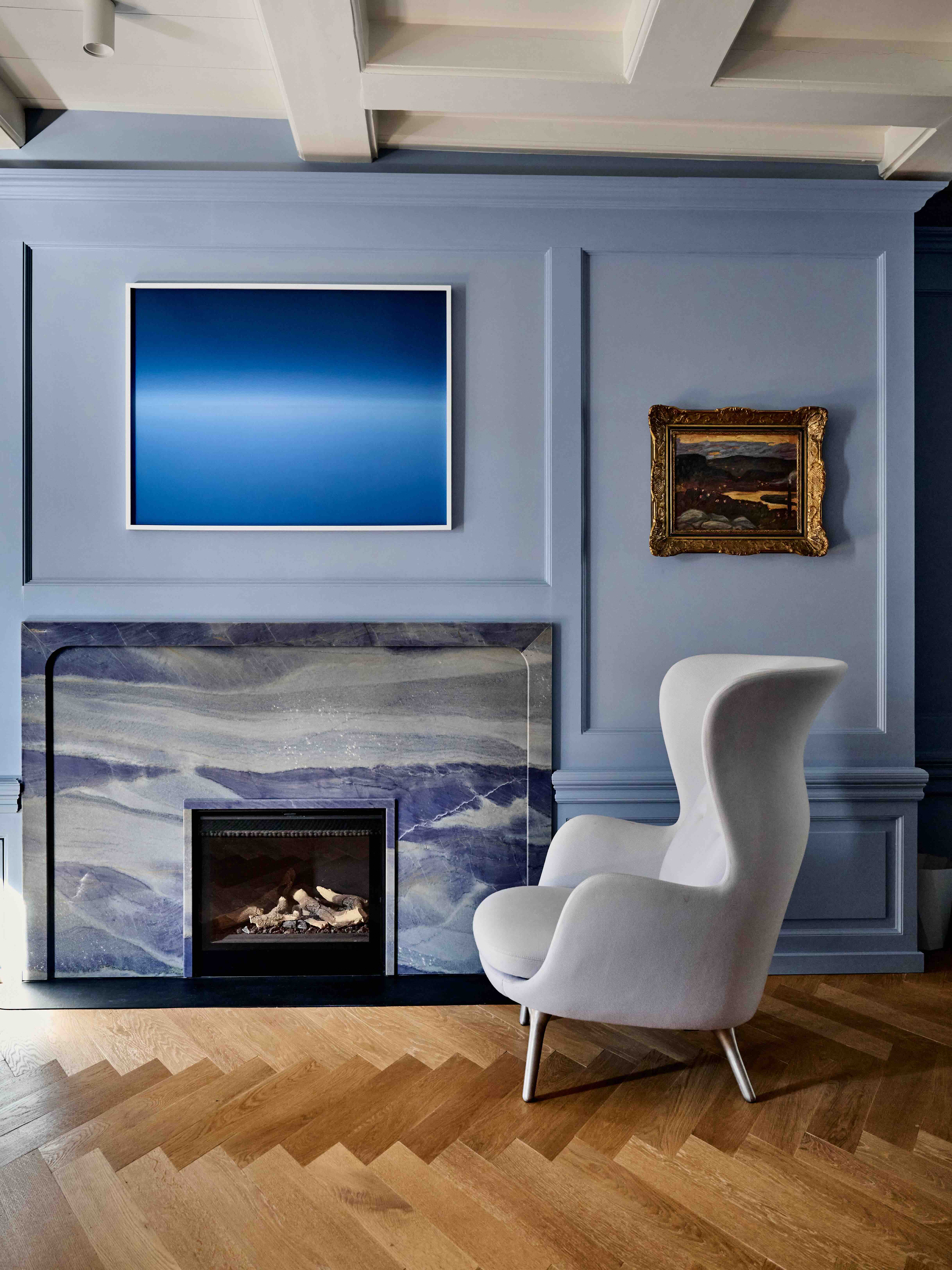
Colour also plays a starring role. The blue marble Annika chose for the bathroom and fireplace in her bedroom became the starting point of the design of both spaces. Her own office tells another story of transformation. “It was a horrible little alcove. My sister said, ‘You’ll never spend any time in there.’ But by reopening a blocked-up window, adding a seat in the sill, and painting it a deep yellow to connect with the adjoining stijkamer, it’s become one of my favourite spaces.”
Even the smallest details carry intention. “Because there are so many different lights in the kitchen, I had the brass switch boards of the light switches engraved with the names of the lamps. I’m so glad I did, since I still have to check which one is which,” Annika says. Elsewhere, a button that once summoned staff now fills the house with music, and the basement, once a concrete void, houses a lively playroom, cinema, and wine room – a layer of modern comfort beneath centuries of character, together creating an atmosphere that exudes calm.
“It’s so peaceful here, even though we’re in the middle of the city. When my parents come to stay, my father loves sitting in the window seat, just watching the boats on the canal.” Through meticulous planning, creativity, and a deep respect for the building’s history, Annika has made a home that once seemed beyond saving feel utterly alive again. Indeed, so enjoyable was the whole experience, she’s been inspired to take the leap into interior design, and to start helping others create their forever home.
AUTHOR: Evelien Reich
MANERA Benelux
Dec 2025

LOCATION
Keizersgracht
1017 EV Amsterdam
CONTACT
annika@finallyhomeinteriors.com
LOCATION
Keizersgracht
1017 EV Amsterdam
CONTACT
annika@finallyhomeinteriors.com